By Germain Ducros
Exploring the relationship between human beings and their environment is an ancient aspect of western culture. Over the years, there have been multiple and diverse takes on the age-old connection between the Greek concepts of topos (place, location) and soma (body). In his article Bodyscape, for example, J. Douglas Porteous (1) explores the metaphor of body as a landscape in literature, and in the song Jóga, the singer Björk expresses her idiosyncratic connection to the land when she sings: “You don’t have to speak / I feel / emotional landscapes / they puzzle me”.
In the following lines the body is viewed as a living, physical testimony of one’s life, a complex, multilayered landscape bearing the traces of one’s experiences, trauma and, through genetics and psychogenealogy, of one’s ancestors.
In our exploration and development of personal geography, we trace constellations of beauty spots. We follow the paths of our inner rivers and feel channels of movement unfolding in our limbs. We build strongholds of stability, thoracic sanctuaries for vital organs. We fight in places of tension, we take great delight in places of pleasure, sometimes hidden even to ourselves. We develop sensitive and cognitive shortcuts to memories and emotions.
We are marked by life, by trauma, like a forest after fire. We can heal from wounds, or broken bones like cracks in our tectonic plates. We treasure memories, as artefacts of the body and mind, ancient murals of our life and, somewhere deep, we shelter the fossils of what came before us.
In my research about how communication and human relations can translate into dance pieces, I was given the opportunity to give a dance workshop aimed at senior citizens around the notion of “testimony” in Lyon, France, together with Thaïs Desveronnieres, a friend and dancer. We decided to explore the following question: how can experience, trauma and physical specificities be addressed to become catalysts for healing, growth, and creation?
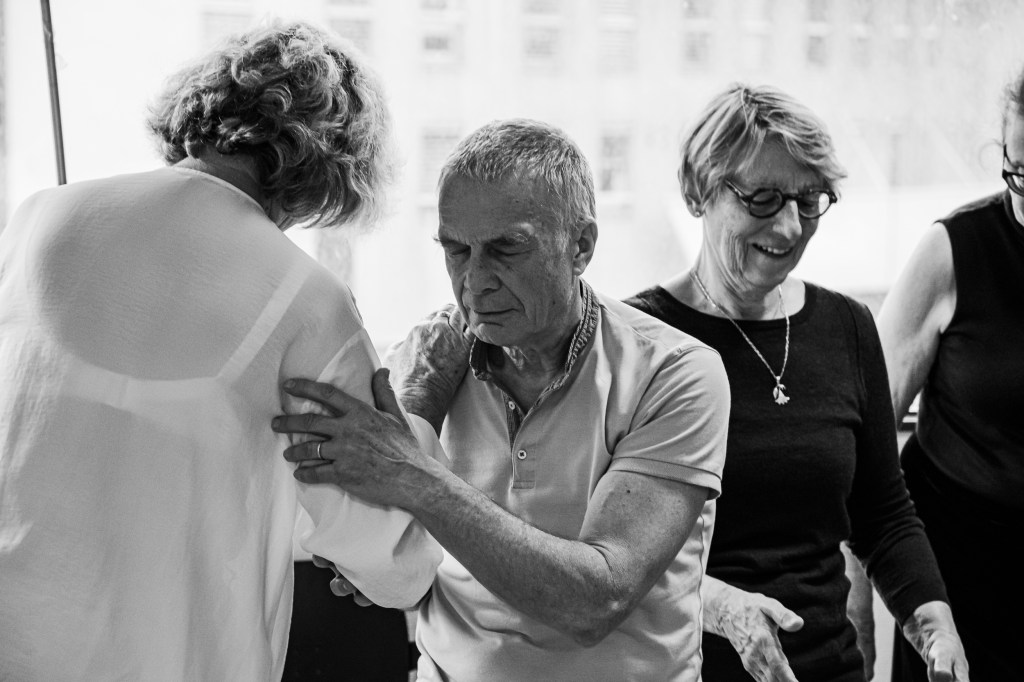
The first part of the workshop is about presentation and representation of the self. The participants have five minutes to choose three adjectives that represent their qualities (for example, I chose “curious”, “tattooed” and “short”), and freely associate one movement to each adjective: these three movements will be their signature for the day. Then, they perform their signature phrase for a partner. This part is usually challenging in the beginning, but very soon, when participants realise there is no wrong answer and their movements will not be judged or “corrected”, they really enjoy it. Some have told us that they had written a new phrase in the following days, to better fit their image of themselves.
The second part of the workshop is about building a relationship and exploring what remains when this relationship is gone. Participants are connected two by two by a thread (approximately two meters long) attached to their right index finger. They are free to move around the studio, but they have to keep a certain tension in the thread at all times. Too tight, and the thread will break; too loose, and the link will dissolve. It is fascinating to experience and to observe these stories of invitation and resistance unfolding at the end of a fragile line.
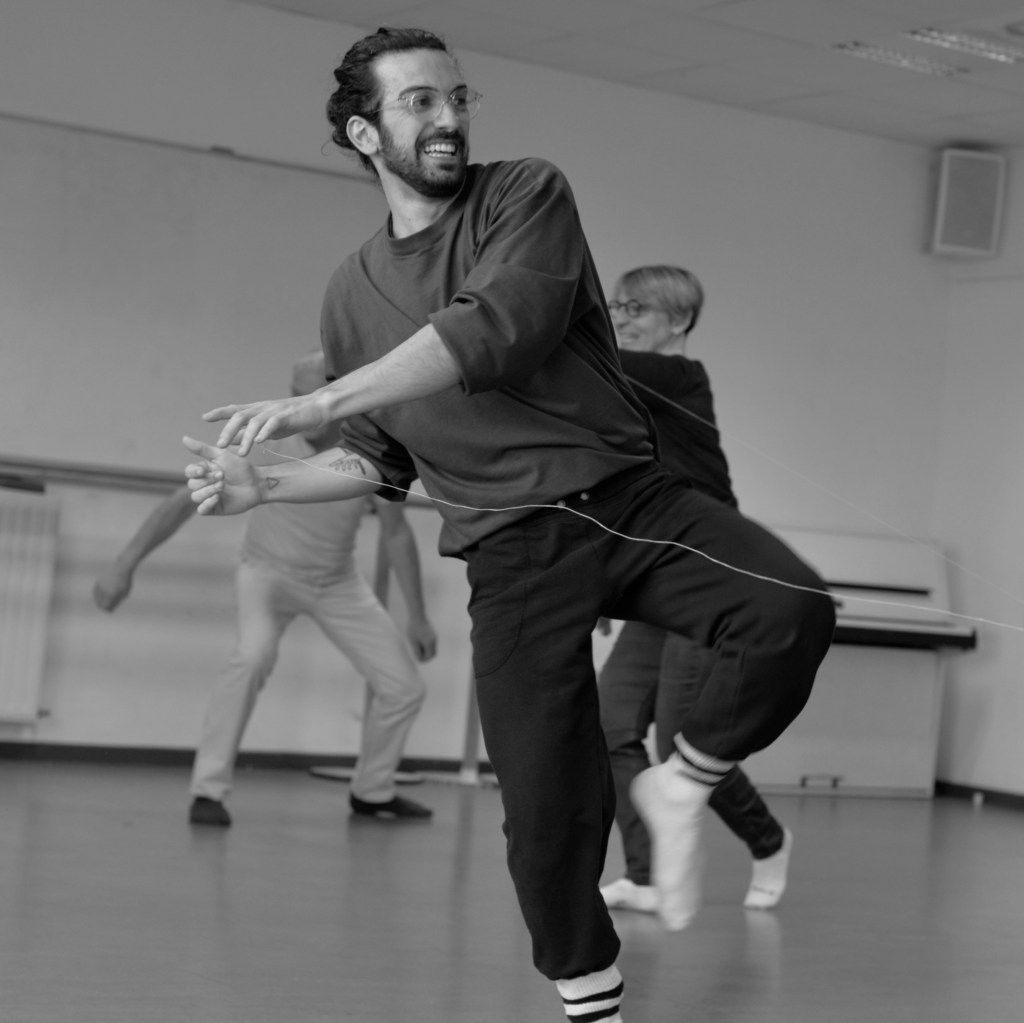
After a moment of exploration, the threads are removed: the participants are invited to continue their duo, this time with an imaginary thread, but they must always keep in mind the former tension, the tightness of the invisible thread between them. After a while, their imaginary thread can move from their index finger to any other part of their body, and finally they are ready to make new connections, and share imaginary threads with other participants. The result of this last stage is always incredibly interesting to watch, as it is almost possible to actually see the web of threads connecting the dancers to each other. The right tension is still there, they have a new acute sense of their partners’ presence, they are dancing with the memory of what is possible to do, and they can now use those memories to fuel new possibilities of movement.
In this short timeframe, the participants have made a journey inside and alongside their soma, their body, visiting inner places to rediscover memories, while surprising and challenging themselves. Many of them have tuned in to what their body has to say, their own subtle language. They have created shortcuts to allow brain memory to access body memory more efficiently, and together, they have started to explore the physical topography of remembering, accepting their body as a site of memory and trauma, dancing through “emotional landscapes” (3).
Notes
(1) Porteous, J. ‘Bodyscape: The body-landscape metaphor’. The Canadian Geographer, 2008.
(2) Björk, “Jóga.” Homogenic, One Little Indian Records, 1997.
(3) Björk, ibid.
 Invisible Wounds